
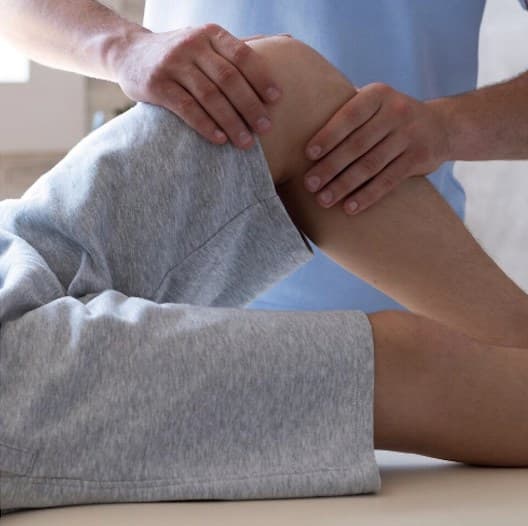
If you have ever felt a stiff neck, a locked-up shoulder, or a knee that just will not bend the way it used to, you know how frustrating lost movement can be. Joint mobilization is one of the most effective hands-on techniques I use to help patients in Northbridge and Ashland get that movement back [1].
It is a cornerstone of what I do at JointWorks PT, and it is something I trained extensively for during my fellowship in orthopedic manual therapy. Let me walk you through what joint mobilization actually is, how it works, and why it is different from what you might experience at a chiropractor's office.
What Is Joint Mobilization?
Joint mobilization is a skilled, hands-on technique where I apply controlled movements to a joint. These are not random pushes or pulls. Each movement is specific to the joint, the direction of restriction, and the level of stiffness I find during your evaluation.
The goal is simple: restore normal joint movement so you can move without pain. When a joint is not gliding, spinning, or rolling the way it should, the surrounding muscles compensate. Over time, that compensation leads to more stiffness, more pain, and more frustration. Joint mobilization breaks that cycle at the source.
Understanding Graded Mobilizations
Not all joint mobilizations are the same. We use a grading system from 1 to 5, and each grade serves a different purpose. Think of it like a volume dial for joint treatment.
- Grade 1 (very gentle): Small, slow movements at the beginning of the joint's range. These are primarily for pain relief. If your joint is irritated and swollen, this is where we start. It calms things down without pushing into stiffness.
- Grade 2 (gentle, larger range): Bigger movements that still stay within the comfortable range. Great for reducing pain and getting the joint used to moving again.
- Grade 3 (moderate, into stiffness): These movements reach into the stiff part of the range. This is where real mobility gains happen. You might feel a stretch or pressure, but it should not be sharp or painful.
- Grade 4 (firm, at end range): Small, firm movements right at the end of the joint's available range. These are targeted at specific restrictions and require precise skill from the therapist.
- Grade 5 (thrust): A quick, small-amplitude push at the end of range. This is what most people think of as a "crack" or "pop." It can be very effective, but it is only one tool in the toolbox.
The grade I choose depends on your specific situation. A freshly injured ankle gets gentle Grade 1 or 2 mobilizations to manage pain. A shoulder that has been stiff for months might need Grade 3 or 4 work to regain full motion. I adjust the approach at every visit based on how your body is responding.
Joint Mobilization vs. Chiropractic Adjustments
This is one of the most common questions I hear. There is some overlap between what I do and what chiropractors do, but there are important differences.
Chiropractic care often focuses on spinal alignment and uses high-velocity thrusts (similar to Grade 5 mobilizations) as the primary treatment. Many chiropractors work on a model of repeated visits for ongoing adjustments.
My approach is different. Joint mobilization is one part of a complete treatment plan. After I restore your joint mobility, we immediately follow up with exercises that teach your body to use that new range. The goal is not to have you coming back for the same treatment over and over. The goal is to fix the problem and give you the tools to keep it fixed.
I also work on far more than the spine. Shoulders, hips, knees, ankles, wrists, elbows: every joint in the body can benefit from skilled mobilization when it is restricted.
What Conditions Respond Well to Joint Mobilization?
Joint mobilization is effective for a wide range of problems I treat at JointWorks PT:
- Frozen shoulder: One of the conditions where mobilization makes the biggest difference. Consistent, graded mobilization can restore range of motion that has been lost for months [2].
- Post-surgical stiffness: After a knee replacement, rotator cuff repair, or other surgery, joints often become stiff during healing. Mobilization helps regain motion safely.
- Neck pain and headaches: Stiff joints in the upper neck are a common source of headaches. Gentle mobilization of these segments often brings significant relief.
- Lower back pain: When specific spinal segments are stiff, mobilization can restore their movement and reduce the strain on surrounding areas.
- Ankle sprains: After a sprain heals, the ankle joint often loses some of its normal glide. This can lead to ongoing stiffness and a higher risk of re-injury [3].
- Arthritis: While mobilization cannot reverse arthritis, it can improve how the joint moves and reduce the pain associated with stiffness [4].
- TMJ (jaw) problems: The jaw joint responds very well to careful mobilization techniques.
Why Fellowship Training Matters
All physical therapists learn basic joint mobilization in school. But there is a significant difference between basic training and advanced fellowship-level skill.
My FAAOMPT credential (Fellow of the American Academy of Orthopaedic Manual Physical Therapists) represents the highest level of training in manual therapy available to a physical therapist. This fellowship involved over a year of intensive, hands-on mentorship focused specifically on joint and soft tissue techniques, clinical reasoning, and advanced patient management.
What does that mean for you? It means I can feel subtle differences in joint stiffness that others might miss. I know exactly how much force to use, in what direction, and for how long. I can adapt my technique to your body's response in real time. What I will not claim is that this makes mobilization work dramatically better than it does. The technique has moderate effects, and my training helps me pick the right joint and the right grade rather than turning a modest tool into a powerful one.
What a Session Looks Like
When you come to JointWorks PT for treatment that includes joint mobilization, here is what you can expect:
- Thorough assessment: I start by testing your joint's movement in multiple directions to identify exactly where the restriction is.
- Targeted mobilization: Using my hands, I apply specific movements to the restricted joint. You may feel pressure or a stretching sensation. Most patients find it comfortable or even relieving.
- Reassessment: After mobilizing, I retest your movement. We should both be able to see and feel a difference right away.
- Exercise follow-up: I give you exercises designed to maintain and build on the mobility we just gained. This is the key to lasting results.
Because JointWorks PT sessions are a full hour of one-on-one time, there is no rushing. I have time to be thorough, to adjust my approach if needed, and to make sure you leave every session better than you came in.
Moving Better Starts Here
Joint stiffness does not have to be something you just live with. Post-surgical stiffness, a locked-up shoulder, chronic back pain: skilled joint mobilization can make a meaningful difference in all of them.
If you are in the Northbridge or Ashland area and want to find out whether joint mobilization could help you, I would be happy to talk it through. Your first consultation is always free.
References
- Anarte-Lazo E et al. Effectiveness of Manual Joint Mobilization Techniques in the Treatment of Nonspecific Neck Pain: Systematic Review With Meta-Analysis. PMID 40019107. PubMed
- Jain TK, Sharma NK. The Efficacy of Physiotherapeutic Interventions in Treatment of Frozen Shoulder/Adhesive Capsulitis: A Systematic Review. PMID 33185587. PubMed
- Brantingham JW et al. The Efficacy of Manual Joint Mobilisation/Manipulation in Treatment of Lateral Ankle Sprains: A Systematic Review. PMID 23980032. PubMed
- Anwer S et al. Effectiveness of Maitland and Mulligan Mobilization Methods for Adults With Knee Osteoarthritis: A Systematic Review and Meta-analysis. PMID 35077423. PubMed
Being Straight About What Mobilization Does
Joint mobilization has good evidence for pain relief and better movement. It is one tool in the plan, and it does its best work paired with exercise.
It also does not put anything back in place. Nothing was out of place. What we are changing is how a stiff joint moves and how sensitive the surrounding tissue is.
The practical consequence is that mobilization on its own tends to wear off. It leaves a joint moving more freely for a while, and what you do with that freedom is the part that lasts. If you are being mobilised week after week with no exercise attached, you are on a treadmill.
None of that makes it a small thing. A stiff shoulder that will not reach a seatbelt, a neck that will not check a blind spot, a knee that will not bend enough to get down stairs properly: these respond, and often faster than people expect. Restoring movement someone had written off is one of the more satisfying parts of this job, and it is a reasonable thing to expect from skilled hands.
What my fellowship training buys you is not a stronger technique. It is better aim. Knowing which joint, which direction, and which grade is what separates a session that changes something from a session that just feels nice.
This article is for general education and is not medical advice. Talk with your own care team about your specific situation.